Pallet Racking Reconfiguration
Racking Inspections
Targeted at-height racking inspection and verticality assessment at an operational facility in Bicester
A targeted follow-up inspection identified defects at upper levels that could not be reliably assessed from the floor and provided the customer with clear priorities for further action.
Bicester | September 2026
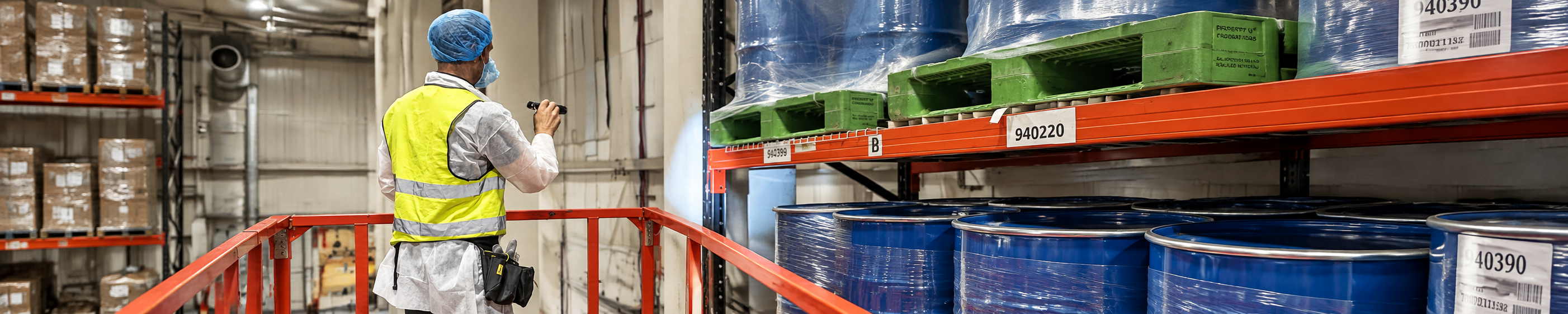
Following a ground-level expert racking inspection, recurring concerns were identified around beam-to-upright connections, beam connectors and beam safety locks.
True Space Solutions recommended a targeted supplementary at-height inspection to establish whether similar issues were present at upper levels that could not be reliably assessed from the floor.
The purpose was not to repeat the full ground-level inspection, but to investigate the upper beam levels and structural components in the areas of concern, while also completing a verticality assessment on selected runs.
Recurring concerns identified at lower levels justified further investigation. Defects affecting beam connections and locking devices raised the possibility that similar conditions could potentially exist at upper levels, where rear-facing and upper components are harder to assess reliably from ground level.
The racking was heavily occupied — approximately 80% full — so visibility to rear-facing components remained challenging. A MEWP was used to improve access and viewing angles, allowing upper-level components to be inspected from a more suitable position.
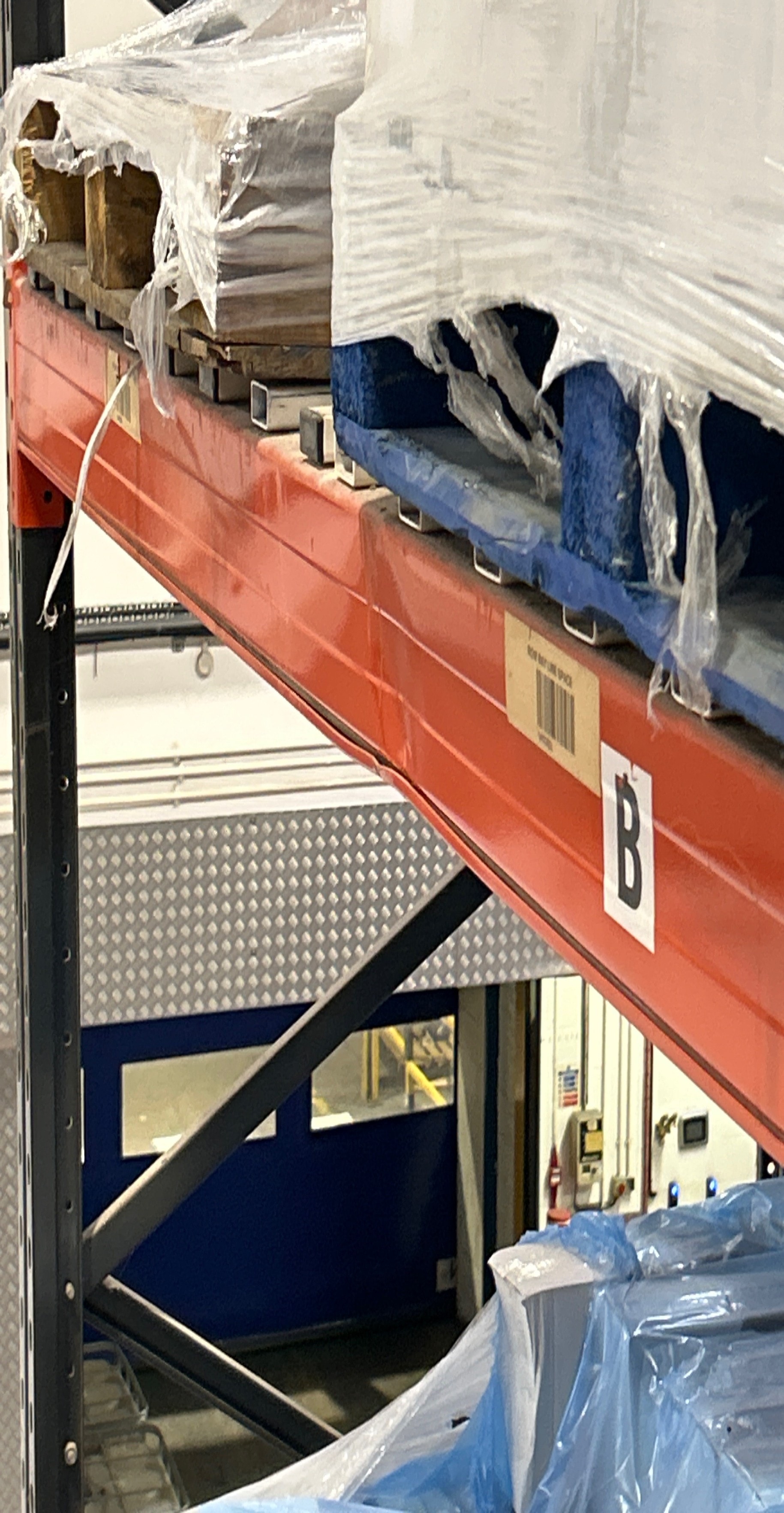
The follow-up inspection identified a number of defects and recurring conditions at height that required further action, including beam damage, upright and bracing damage, and issues with beam safety locks.
16
Red Risk items
164
Amber Risk items
1
Verticality location outside tolerance
A significant repeated issue was also identified at the top beam level. 152 of the Amber Risk items related to the same top-beam condition, where the beam connector extended above the top of the upright. The original equipment manufacturer subsequently confirmed that the arrangement should be treated as a defect.
The photographs below show examples identified during the inspection. Each was classified as Red Risk and required immediate action in line with the inspection recommendations.
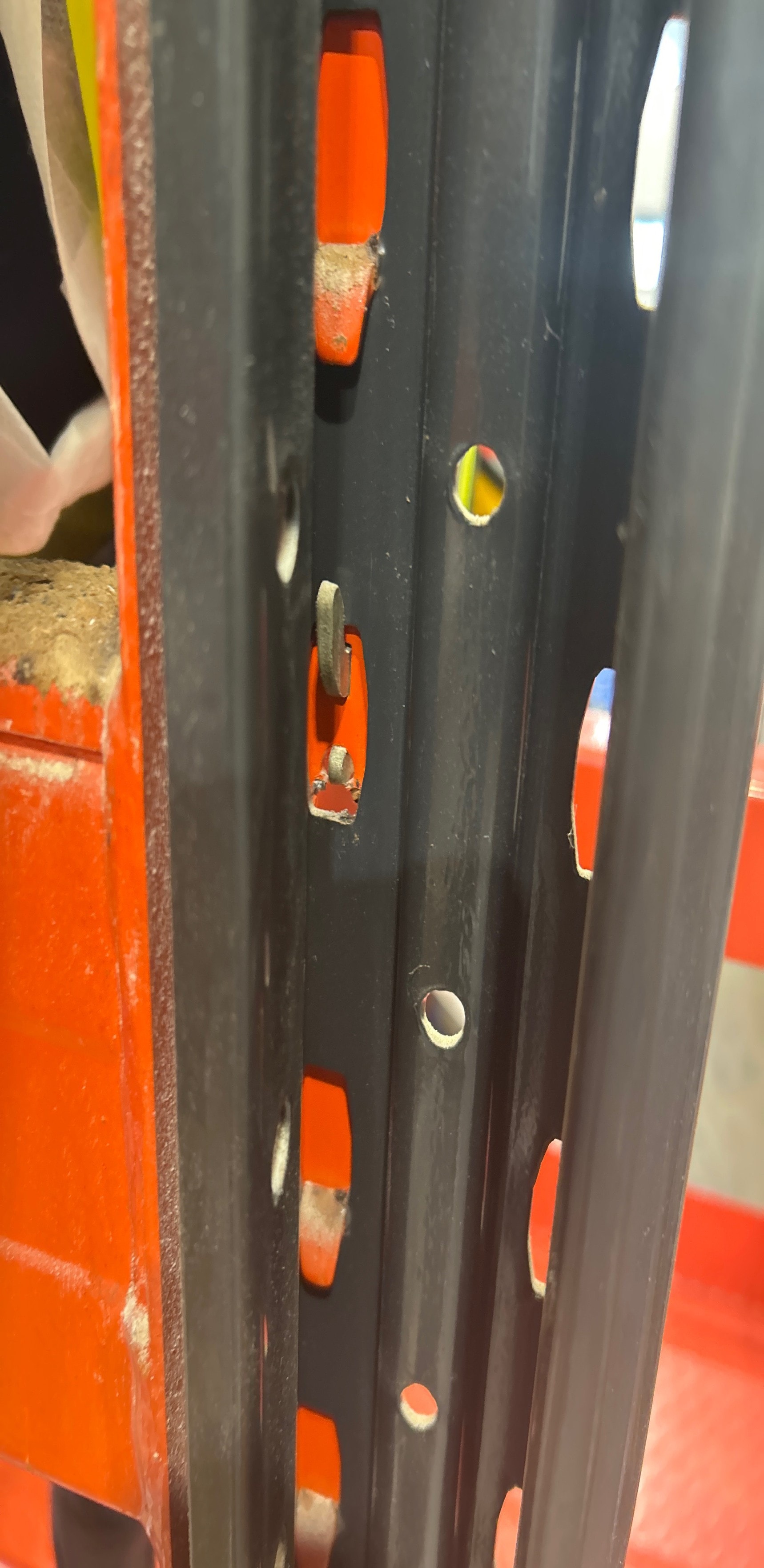
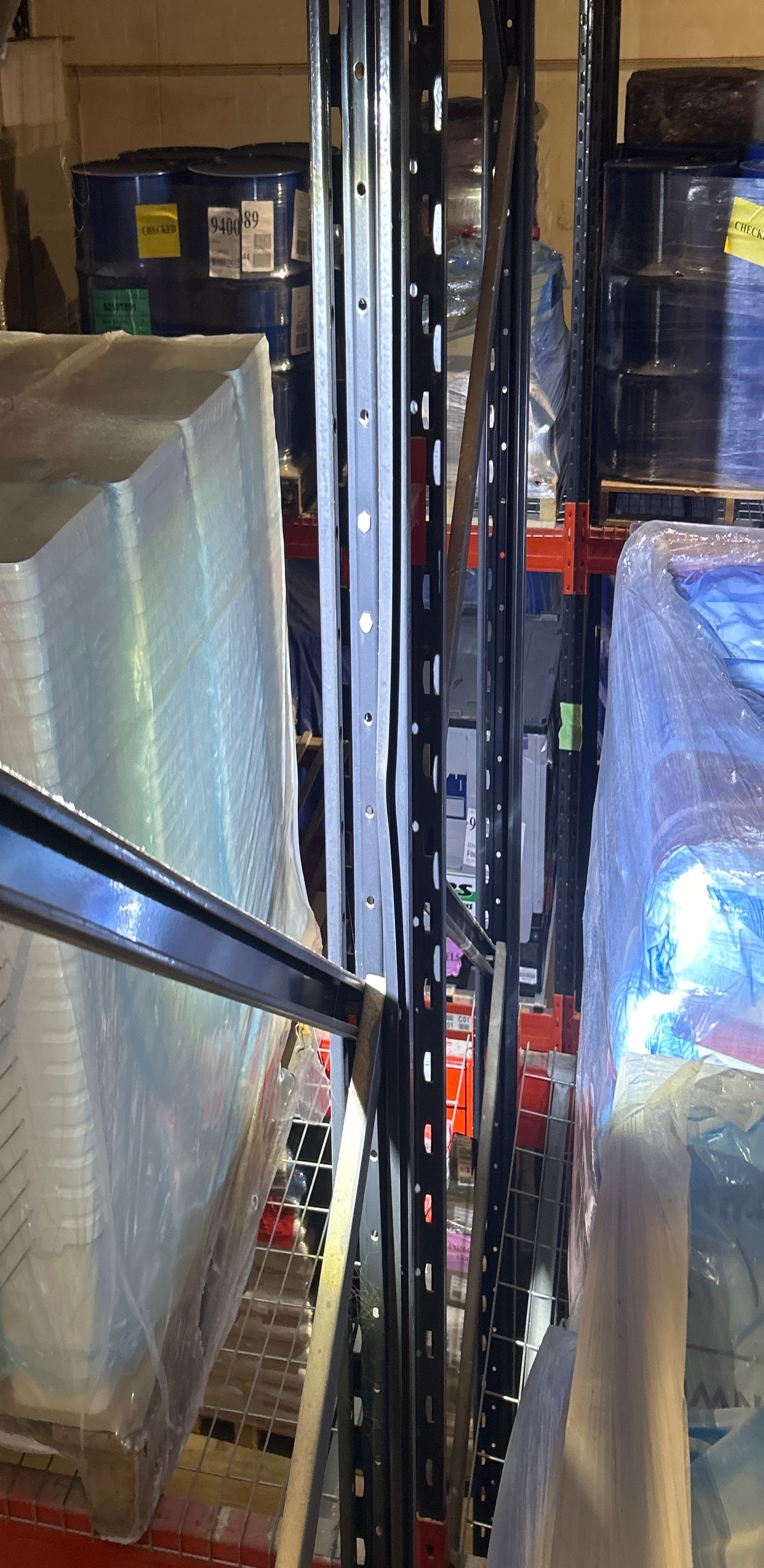
As part of the same visit, True Space Solutions carried out verticality checks to selected runs. Measurements were taken at the base and top beam level using a Leica Total Station. Of the locations tested, one was found to exceed the permitted tolerance and was identified for rectification and rechecking.
The at-height visit did more than confirm isolated damage. It identified repeated defect patterns, a systemic top-beam issue and a verticality concern that required specific follow-up action.
The customer received a clear, prioritised picture of the condition of the racking at height, allowing immediate risks to be isolated and remedial works to be planned in a structured way. The findings also provided useful information for longer-term decisions around repairs, component replacement and the future management of the installation.
Most expert racking inspections are carried out from ground level. That is appropriate for normal inspections, but there are occasions where the evidence points to a need for further investigation at height.
This project is a good example. The ground-level inspection identified warning signs that justified further investigation. The follow-up visit provided a clearer picture of the condition of upper-level components that would have been difficult to assess reliably from the floor.
A Practical, Evidence-Led Approach
If a ground-level inspection identifies recurring defects or concerns at height, True Space Solutions can provide targeted at-height inspection support and clear follow-up recommendations.
Book a Racking InspectionPallet Racking Reconfiguration
Pallet Racking & Mesh Decking