SEMA Approved Racking Inspector
What's Included in a SEMA Approved Racking Inspection?
An expert racking inspection is much more than simply looking for damaged uprights and beams.
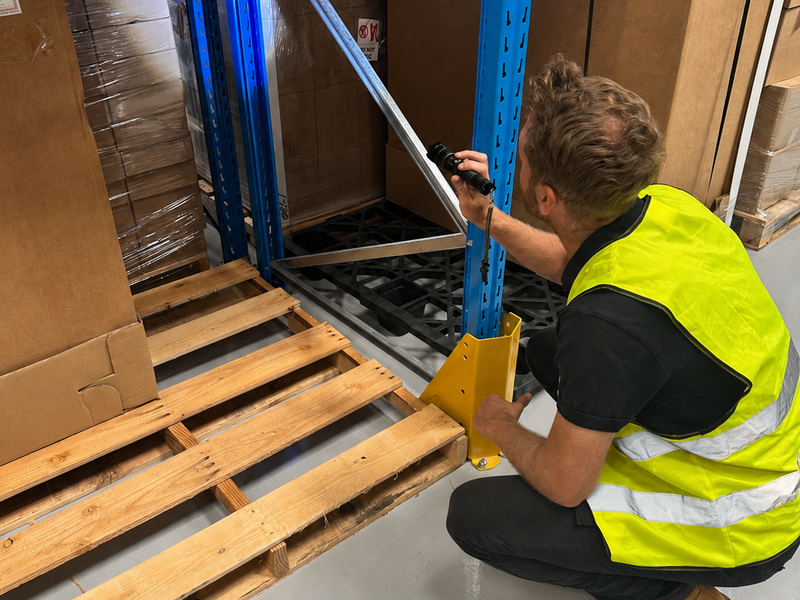
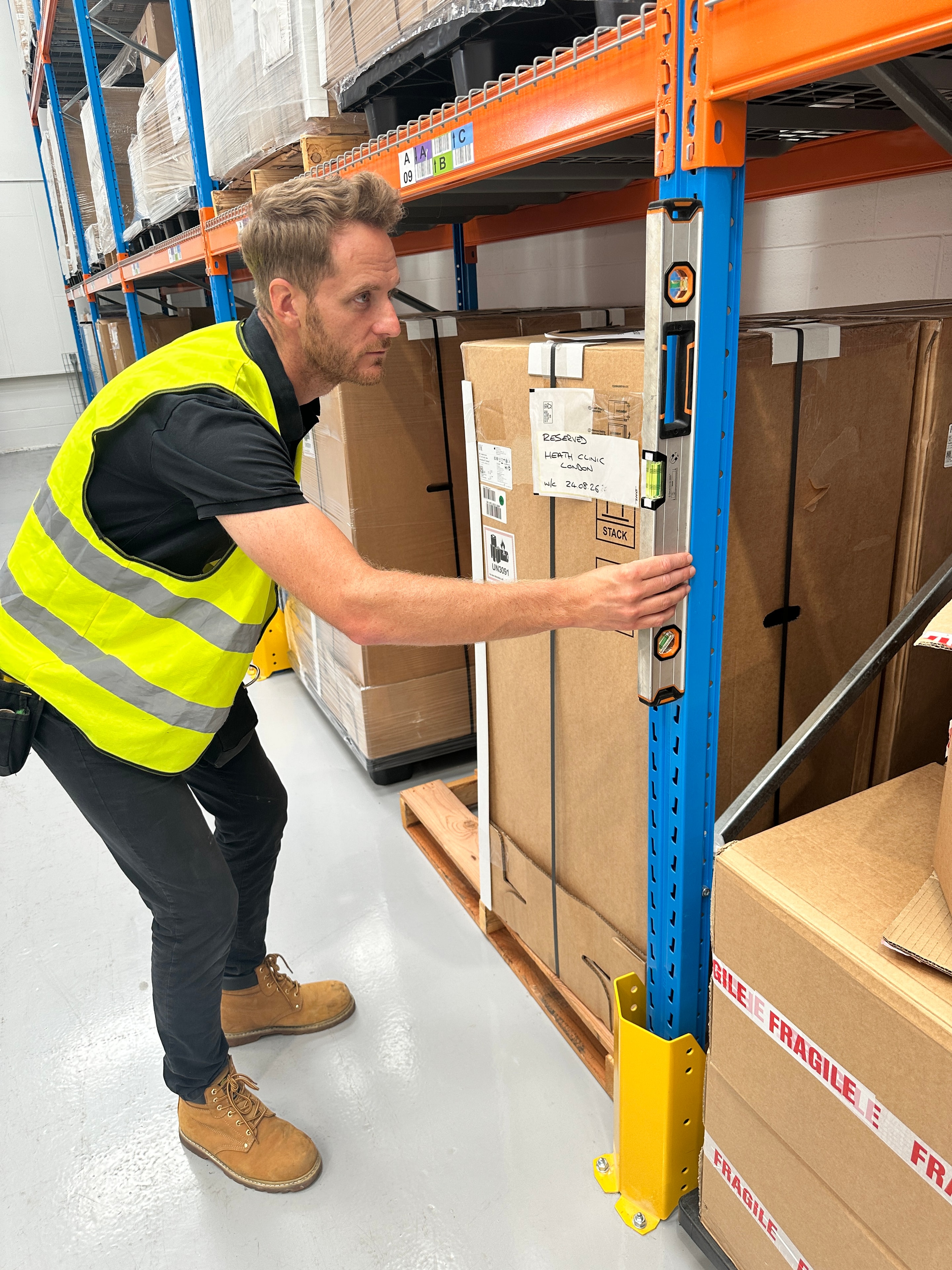
HSE guidance recommends that racking is inspected by a technically competent person at intervals of no more than 12 months. Our expert inspections are carried out by a SEMA Approved Racking Inspector (SARI) and consider not only the condition of the racking, but also how the storage system is configured, loaded and used within your warehouse.
Request an InspectionWhat We Look at During an Expert Inspection
Our SARI inspections cover the full picture — not just visible damage.
Racking damage
Including uprights, bracing, beams, connectors and other structural components.
Damage classification
Findings are assessed and categorised using the recognised SEMA risk classification system.
Rack configuration
Including beam levels, bay clearances and potential installation or configuration issues.
Pallet and load clearances
Considering pallet size, load size, overhang and the clearances available within the racking.
Load notices
Checking that load notices are present and that the information displayed appears appropriate and plausible for the installation.
Pallet condition and suitability
Highlighting pallet issues that could affect the safe use of the racking.
Mechanical handling equipment
Considering the type of equipment being used and whether this may be contributing to damage or operational risk.
Operating aisle widths
Considering whether the aisle appears suitable for the equipment and operation being undertaken.
Floor condition
Identifying obvious issues that could affect the racking installation.
Housekeeping and general safety
Identifying issues around the racking that may contribute to damage or unsafe operation.
Repeated damage
Looking for patterns of damage and recommending practical measures that may help reduce recurrence.
Inspection and maintenance procedures
Discussing whether regular internal inspections, damage reporting and maintenance processes are in place.
More Than a Damage Inspection
A damage-only inspection primarily identifies and records damaged components.
A SARI expert inspection goes further by considering the overall suitability and use of the storage system, including its configuration, pallets, loads, clearances, handling equipment, load notices and the way the racking is being operated.
| Inspection considers | SARI Expert Inspection | Damage-Only Inspection |
|---|---|---|
| Racking damage | ||
| Location of damaged components | ||
| Suitability of storage equipment | — | |
| Suitability of warehouse operation | — | |
| Rack configuration | — | |
| Pallets and loads | — | |
| Load notices | — | |
| Handling equipment | — | |
| Housekeeping and general safety | — | |
| Corrective-action recommendations | — | |
| Formal expert report | — |
This wider view can help identify issues before they develop into repeated damage or more significant safety concerns.
Clear Risk Classification
Any racking damage identified during the inspection is assessed using the recognised SEMA traffic-light classification system.
Green
Damage falls within SEMA limits. Record it and review it at the next inspection — Green does not mean the damage should be ignored.
Amber Risk
Damage requiring remedial work within 4 weeks. Immediate offloading is not required, but once affected pallet locations are emptied they must not be refilled until repairs are completed. If not repaired within 4 weeks, the item becomes Red Risk.
Red Risk
High levels of damage requiring the affected area to be immediately offloaded and isolated from use until repairs are completed.
Where a Red Risk is identified during the inspection, we will bring this to the client's attention during the inspection rather than waiting for the completed report.
What You'll Receive
Following the inspection you will receive:
- A written expert inspection report
- A schedule of findings
- Location of damaged components
- SEMA risk classifications
- Photographic evidence where appropriate
- Observations relating to the wider use of the storage system
- Practical recommendations and corrective actions
- A debrief on the key findings
Our aim is not simply to provide a list of damaged components. We want to help you understand why issues are occurring, what needs to be prioritised and what practical steps can be taken to improve racking safety.
Scope and Limitations
To ensure there is a clear understanding of the service being provided, there are certain activities that fall outside the scope of a standard SARI expert inspection.
- Carrying out physical alterations or repairs to the racking.
- Producing risk assessments or method statements for subsequent repairs or accident recovery works.
- Establishing the exact weight of individual pallet loads.
- Undertaking structural rack design calculations.
- Verifying the precise engineering design capacity stated on load notices.
- Producing rack design data or replacement load notices.
- Inspecting electrical or mechanical equipment.
- Climbing the racking as part of the standard ground-level inspection.
- Undertaking detailed structural or civil engineering assessment of floor cracking, subsidence or other floor defects.
- Carrying out formal rack-collapse investigations or unloading damaged racking.
- Acting as an expert witness.
Where something is identified that falls outside the scope of the inspection, we will explain the concern and, where appropriate, recommend that further information, investigation or specialist advice is obtained.
Need an Expert Racking Inspection?
Whether you require your annual expert inspection or want independent advice on the condition and use of your storage equipment, speak to True Space Solutions.
Request an Inspection