Is Your Warehouse Ready for Peak? A Pre-Q4 Checklist
Peak season is when warehouses run hardest. Higher stock volumes, more forklift movements, more pressure on every bay, beam, and upright. It's also when undetected problems are most likely to cause a serious incident — or simply cost you capacity at the worst possible time.
Before Q4 arrives, it's worth working through a straightforward checklist. Not a tick-box exercise. A genuine review of whether your warehouse is actually ready.
1. When was your racking last formally inspected?
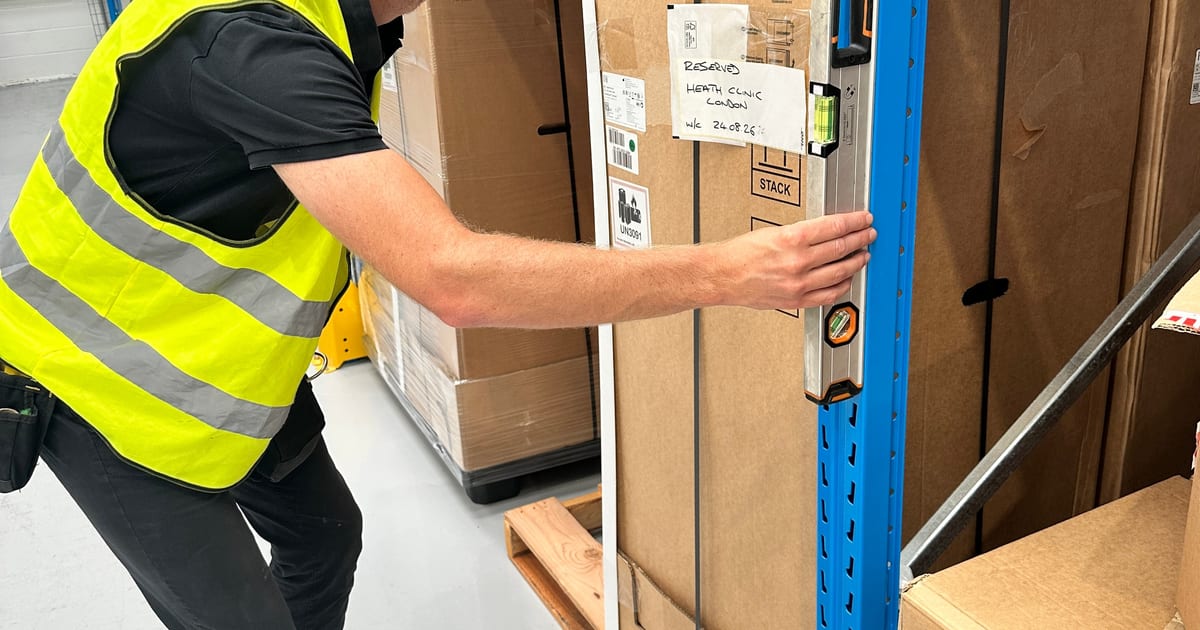
The Health and Safety Executive (HSE) recommends that pallet racking is inspected at least once a year by a competent person — and more frequently in busy or high-throughput environments. A SEMA Approved Rack Inspector (SARI) carries out inspections to the current SEMA guidelines and produces a written report with photographic evidence and risk classifications.
If you can't remember the last time your racking was formally assessed, that's your answer.
2. Are there known defects that haven't been repaired?
It's common for warehouses to have a list of known issues that have been noted, logged, and then quietly deprioritised. Approaching peak with unresolved Red or Amber Risk findings means approaching peak with less usable space — and a higher risk of something going wrong under pressure.
Red Risk findings require immediate action: the affected area should be offloaded and isolated until repairs are completed. Amber Risk findings require remedial work within 4 weeks — once affected pallet locations are emptied they must not be refilled until repaired, and unresolved items become Red Risk after that period. Neither should be carried into your busiest weeks.
3. Could you be losing pallet locations to unresolved damage?
This is the capacity question that often gets missed. Damaged racking isn't just a safety issue — it's a space issue. Every bay that's out of service because of an unresolved defect is a pallet location you can't use.
For a warehouse running at or near capacity during peak, that matters. Recovering those locations before Q4 starts means completing repairs now, not in November.
4. Is there damage that might not be visible from ground level?
In high-bay warehouses, damage to upper and rear components can be difficult to identify during a standard ground-level inspection. Uprights, beams, and connectors at height may have sustained impact damage that isn't obvious until someone looks properly.
If your warehouse has significant height and high throughput, it's worth considering whether an at-height inspection is appropriate — not as a standard requirement, but as an additional investigation where the risk warrants it.
5. Are you making the best use of your existing space?
Peak season often prompts the question: could we fit more in? Before investing in additional racking, it's worth reviewing whether your existing configuration is working as hard as it could.
Beam-level changes, pick-face adjustments, and adapting layouts to current stock profiles can all recover capacity from existing racking. Any changes need to be properly assessed — altering beam levels or configurations without checking the effect on the racking design can create new problems — but a structured review often identifies more capacity than expected.
6. Do your team know the load notices?
Load notices specify the maximum load capacity for each bay. If your racking has load notices, your team should know where they are and what they mean. If they don't exist, or if they haven't been reviewed since the racking was installed or last reconfigured, that's worth addressing before peak.
7. Are your weekly checks being completed?
SEMA guidance recommends that a trained member of your team carries out weekly visual checks of the racking. These aren't a substitute for a formal inspection, but they're an important part of ongoing racking management — particularly in busy environments where impact damage can occur between formal inspections.
---
What to do if you're not confident in your answers
If working through this checklist has raised questions, the next step is straightforward: get an expert pallet racking inspection carried out before peak arrives.
At True Space Solutions, we carry out inspections across the Midlands, complete repairs quickly, and help customers recover pallet locations before their busiest weeks. We're not just an inspection company — we're the team that helps you move from identifying the problem to getting it resolved.
Fast response. Practical advice. Clear next steps.