Why Q4 Is the Worst Time to Discover a Racking Problem
Every warehouse manager knows the feeling. Stock levels climb, delivery schedules tighten, and the pressure to keep everything moving intensifies. Q4 is the season when warehouses run at their hardest — and it is also the season when a racking failure can do the most damage.
The problem is not that racking suddenly becomes dangerous in October. The problem is that defects which have been quietly developing for months — or years — finally meet the conditions that push them past the point of failure.
The Q4 pressure cooker
During the autumn and winter peak, most warehouses see a significant increase in:
- Stock volume — bays that are normally half-full get loaded to capacity
- Forklift movements — more picks, more putaways, more opportunity for impact damage
- Operational pace — staff under pressure to move quickly, with less time to notice or report damage
- Temporary staff — seasonal workers who may not know the site or the racking system
Each of these factors increases the load on your racking and reduces the likelihood that damage will be spotted and reported before it becomes critical.
What undetected defects look like
Racking defects rarely announce themselves dramatically. The most dangerous ones are often invisible to the untrained eye — or easy to dismiss as minor.
A sheared tongue on a beam connector is not noticeable. Localised corner damage to an upright may seem unsignificant. Misplaced pallets may look perfectly stable, until the moment they're not.
On a recent inspection at a Midlands warehouse, our SEMA-Approved Racking Inspector identified a significant number of Red Risk and Amber Risk defects across the facility. The client had been operating the site for years without a formal assessment. None of the defects had been reported internally. Several required immediate unloading and access restriction.
That is not unusual. It is, in fact, a fairly typical picture for a warehouse that has never had a SARI inspection.
The cost of getting it wrong
A racking collapse is not just a health and safety incident. The downstream consequences can include:
- Personal injury or fatality — the most serious outcome, with significant legal and human cost
- Stock loss — a collapsed bay can write off thousands of pounds of product in seconds
- Operational shutdown — a serious incident can take a facility offline for days or weeks
- Insurance complications — if a collapse occurs and you cannot demonstrate a history of inspection and maintenance, your insurer may dispute the claim
- Regulatory action — the HSE takes racking safety seriously; a failure to inspect can result in enforcement notices or prosecution
The cost of a SARI inspection is a fraction of any of these outcomes. The cost of not having one is potentially unlimited.
Why the autumn window matters
There is a practical reason to book your inspection in September or October rather than waiting until November or December.
First, availability. Autumn is our busiest booking period, and slots fill quickly as warehouse managers across the Midlands recognise the same risk window. If you wait until November, you may not be able to get an inspection before your peak period begins.
Second, lead time for repairs. If our inspection identifies Red Risk defects — and statistically, it is likely to find something — you need time to carry out repairs before your busiest weeks. Booking in September or October gives you that window. Booking in December does not.
Third, peace of mind. Heading into Q4 knowing your racking has been formally assessed, defects have been identified and addressed, and you have a written report on file is a fundamentally different position to hoping for the best.
What a SARI inspection covers
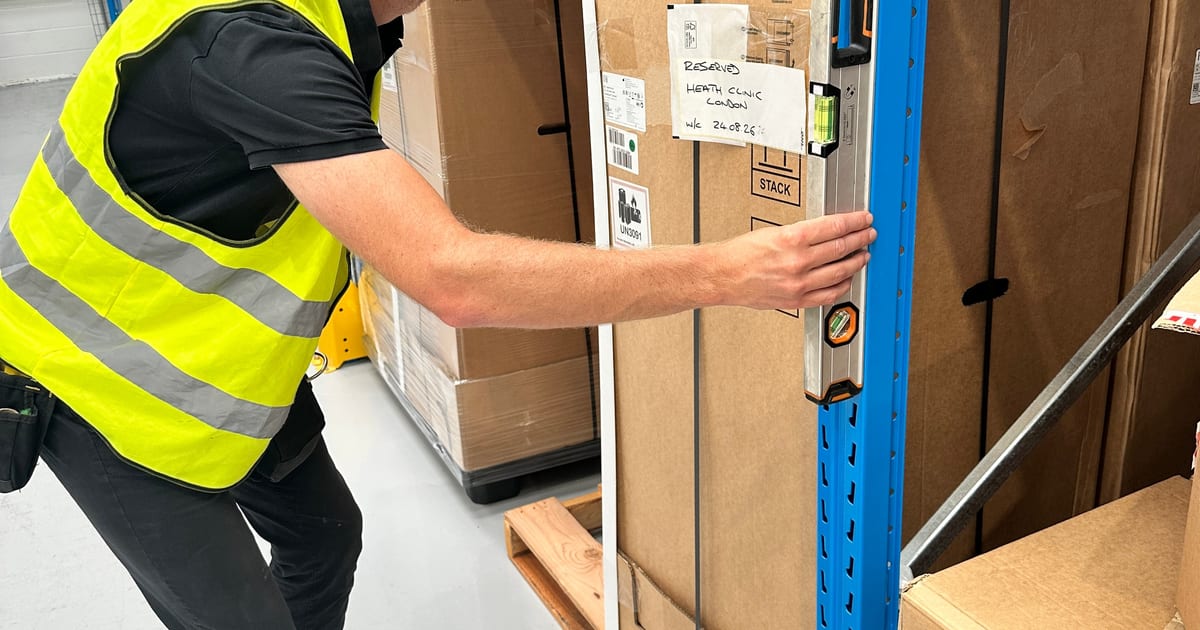
A SARI inspection is not a quick walk around with a clipboard. It is a systematic assessment of every aisle, bay, upright, and beam in your facility, carried out against current SEMA guidelines and HSE requirements.
At the end of the inspection, you receive:
- A full written report with findings for every section of racking inspected
- Photographic evidence of every defect identified
- Red, Amber, and Green risk classifications for every finding
- Load notices where overloading has been identified
- Recommendations for repair, monitoring, or immediate action
The report is yours to keep, share with your team, and present to insurers or auditors. It is the documentary evidence that you have taken your duty of care seriously.
SEMA guidelines and the 12-month rule
The Storage Equipment Manufacturers' Association (SEMA) recommends that all pallet racking is inspected by a SARI at least once every 12 months, with additional user inspections carried out weekly.
If your last formal inspection was more than 12 months ago — or you have never had one — you are outside the recommended inspection cycle. That is a risk worth addressing before Q4, not after.
True Space Solutions: Midlands racking specialists
True Space Solutions are SARI-qualified racking inspectors covering the whole Midlands. We are not a generalist health and safety firm — racking inspection, repair, and installation is all we do.
Our inspections are carried out by qualified SARI inspectors, and our reports are detailed, photographic, and written to be genuinely useful — not just a compliance tick-box.
We also carry out repairs and reconfiguration work, so if our inspection identifies defects, we can fix them too. You do not need to manage multiple contractors.
Autumn slots are available now, but they fill quickly. Book your inspection before the Q4 rush and head into your busiest period with confidence.